Blog / Cadillac Racing

Behind the Speed: How the Cadillac Formula 1 Team Never Stops Working

Behind the Speed: How the Cadillac Formula 1 Team Never Stops Working

The checkered flag drops. The champagne flows. The crowd erupts. For most of us, that is where the story ends. But for the Cadillac Formula 1 Team, the moment the race is over is the moment the next one begins. Season 2 of Cadillac's original series "What Makes Fast" pulls back the curtain on what happens in the hours and days immediately following a race weekend, and the answer might surprise you. There is no rest, no celebration tour, and no downtime. There is only work.

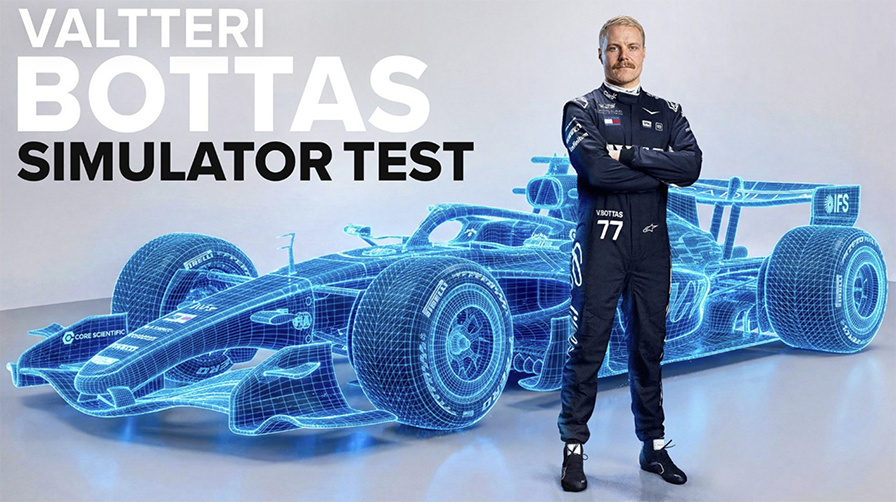
Just days after stepping out of the car on race day, Cadillac F1 driver Valtteri Bottas is already strapped back into the team's simulator at the GM Technical Center in Charlotte, North Carolina. His mission is a process known as correlation: matching his real-world, seat-of-the-pants impressions from the race to the car's detailed digital counterpart.

In Formula 1, on-track time is tightly regulated, which means the vast majority of a car's development has to happen in the virtual world. Getting the simulator to accurately mirror the real car is not just helpful. It is essential.

Sim driver Simon Pagenaud and the full simulator team in Charlotte dedicate countless hours to making sure the digital version of the car behaves exactly like the physical one. Every nuance, every handling characteristic, every split-second reaction the driver experiences on track has to be faithfully reproduced in the simulator before meaningful development work can begin.

When that correlation is dialed in, the payoff shows up exactly where it matters most: on the track, from Friday practice all the way through Sunday's podium celebrations.

It is an exciting time to be a Cadillac fan. Watching the brand compete at the highest level of motorsport is a powerful reminder of the engineering excellence and relentless drive for performance that defines Cadillac. Those same qualities are present in every vehicle on our showroom floor.
Posted in:

Related Posts

Cadillac Racing Pulls Off a Historic Championship Hat-Trick

Cadillac Racing Pulls Off a Historic Championship Hat-Trick

It’s the kind of season that defines a racing program’s legacy. In the 2026 IMSA WeatherTech SportsCar Championship, Cadillac Racing accomplished something truly extraordinary, sweeping all three of the sport’s most coveted titles in a single season. Cadillac claimed the GTP Manufacturer Championship, the No. 31 Cadillac Whelen team captured the Team Championship, and the No. 31’s own Jack Aitken took home the Driver Championship. A complete and historic hat-trick. The foundation of this championship sweep was laid well before the season began. A comprehensive set of aerodynamic and braking updates introduced on the Cadillac V-Series.R gave the program a meaningful step forward in performance and drivability right from the opening round. “We had a lot of focus on improving the car for this season,” said Cadillac Racing Program Manager Keely Bosn. “At Daytona, we hit the ground running and the update really proved itself. The drivers all spoke very positively about the changes we made. It just shows the strength of the program that we’re able to make those changes, make them work, get them on track, and extract more performance.” The results backed up those words. Cadillac Racing extended a podium streak that dates back to last year’s Indianapolis race, collecting 11 podiums from nine races throughout the 2026 IMSA season. Highlights included the No. 31 winning at Detroit, Cadillac’s home race, and at Watkins Glen, while Wayne Taylor Racing added the program’s first V-Series.R victory with the No. 10 at Road America. The No. 31 also earned additional season-wide honors for leading laps, pole positions, sustainability, and minimizing time on pit lane. Behind the championship results is a collaborative philosophy that Cadillac Racing put into place at the start of 2025 and fully realized this season. The “One Team” strategy brought together three partner teams under a unified technical and strategic approach: Action Express and Wayne Taylor Racing in IMSA, and Hertz Team JOTA in the FIA World Endurance Championship. “We had engineers and race leads from all three teams attending both IMSA and WEC races this year,” Bosn explains. “When we say we have a ‘One Team’ approach, we truly mean it.” Drivers played a central role in making that collaboration work. Jack Aitken and Earl Bamber raced across both the full IMSA and WEC seasons, with Jordan Taylor, Will Stevens, Louis Delétraz, Filipe Albuquerque, and Ricky Taylor all making appearances in both championships as well. The cross-pollination of experience and feedback from drivers racing in multiple series proved to be one of the program’s most valuable competitive advantages.

Inside the Cadillac F1 Car: The Technology Behind Every Lap

Inside the Cadillac F1 Car: The Technology Behind Every Lap

When the Cadillac Formula 1 Team’s MAC-26 streaks down the straight at 200-plus miles per hour, something remarkable is happening beneath the surface. Every fraction of a second, the car is collecting, processing, and transmitting a staggering volume of data to engineers around the world, all in pursuit of the tiniest competitive advantage that could make the difference between a podium and a points finish. The Cadillac F1 car is unlike any other racing machine on the planet. Experts estimate there could be more than 10 miles of wiring contained within the MAC-26, every strand tasked with measuring and communicating the performance of individual vehicle components down to the millisecond. Sensors monitor engine power output, tire pressures, aerodynamic airflow around the bodywork, and every minute change in direction as the car navigates each corner of the circuit. All of that information is broadcast simultaneously to engineers at the track and to the Cadillac Formula 1 Team’s engineering headquarters in both Silverstone, England and Charlotte, North Carolina, creating a real-time global network of expertise focused on one goal: making the car faster. The information flowing out of the MAC-26 does not just paint a picture of how the car is performing at the moment. It guides the engineering team’s decisions in real time during a race, whether that means adjusting a driver’s brake bias from the pit wall, changing fuel mapping strategies, or planning a tire change window. Between races, that same data feeds directly into the GM Driver In Loop simulator in Charlotte, where drivers and engineers use it to practice and prepare for the next circuit on the calendar. The precision required to manage this information flow under race conditions is immense. “It’s definitely a weight on our shoulders,” says Ryan Tincher, IT Operations Manager at GM Motorsports. “But it’s not anything the team shies away from. It’s part of what brings everybody back every weekend.” What makes this story so compelling is not just the technology itself but what it represents: an unwavering commitment to continuous improvement and the relentless pursuit of performance. That same philosophy, finding every possible advantage through engineering excellence and data-driven refinement, is woven into the DNA of every vehicle Cadillac produces. The MAC-26 is the most visible expression of what Cadillac’s engineering culture is capable of when given the most demanding stage in motorsport. And the lessons learned on that stage find their way back into the vehicles on our showroom floor.

Cadillac Racing Returns to Brazil Looking to Repeat Historic Success

Cadillac Racing Returns to Brazil Looking to Repeat Historic Success

Cadillac Hertz Team JOTA is headed back to Brazil with its sights set on another standout performance in the FIA World Endurance Championship (WEC) as the team prepares for the Rolex 6 Hours of São Paulo at the legendary Autódromo José Carlos Pace, better known as Interlagos. The event holds special significance for Cadillac Racing. Last season, the team delivered a historic 1-2 finish—the first by a U.S. manufacturer in the Hypercar class of the FIA WEC. The milestone victory marked Cadillac's first-ever WEC win and showcased the performance of the Cadillac V-Series.R on the global stage. This year, the No. 38 Cadillac Hertz Team JOTA V-Series.R will be piloted by Jack Aitken, Earl Bamber, and Sébastien Bourdais, while Norman Nato and Will Stevens will share driving duties in the No. 12 entry as Alex Lynn continues his recovery. Following a strong showing at the 24 Hours of Le Mans, where Cadillac demonstrated impressive speed throughout the race, the team enters São Paulo with confidence and momentum. Cadillac Racing Program Manager Keely Bosn noted that last year's victory was more than just a race win—it reinforced Cadillac's ability to compete with the world's best while providing valuable insights that help shape future performance and technology. Drivers from both Cadillac entries are equally eager to return to the iconic Brazilian circuit. Several reflected on the unforgettable atmosphere, passionate fans, and memorable podium celebration following last year's victory, while others are excited to experience the challenging Interlagos track for the first time. The Rolex 6 Hours of São Paulo promises another exciting chapter in Cadillac Racing's pursuit of championship success. As the team looks to build on last year's breakthrough victory, fans can expect another determined effort from the Cadillac V-Series.R as it continues to compete among the world's premier endurance racing teams.